Speak Arabic with real people, from your first lesson
Spoken Arabic of Lebanon, Syria, Jordan and Palestine
Arabic as it's really spoken in Beirut, Damascus, Amman and Jerusalem. For talking with a partner's family, making friends, working in the region, or finally understanding what everyone at the table is laughing about.
What you'll learn
- Everyday conversation: greetings, family, food, directions
- Real listening: fast speech, voice notes, TV, songs
- The hard sounds: ع ح ق خ, trained from lesson one
- Arabizi: reading "kifak? shou 3am ta3mol?"
- Culture: what to say at weddings, funerals, family lunches
- Reading basics: whenever you're ready
This path fits if…
- You have Lebanese, Syrian, Jordanian or Palestinian family or a partner, and you want to join the conversation
- You work or travel in the region and textbook Arabic gets you blank looks
- You tried apps and can read a little, but you freeze when someone actually talks to you
Three things you'll say in your first lesson
Every lesson follows four steps
60 minutes, one-to-one, live by video call. Each lesson moves you forward the same way.
We bring back last lesson's words and structures, spaced over time so they stay with you.
New material arrives in context, in a real sentence, phrase or verse, before any rule is named.
You speak, read or recite it yourself, with patient correction of sounds and structure.
Each lesson is logged in your student portal with what you covered and what comes next.
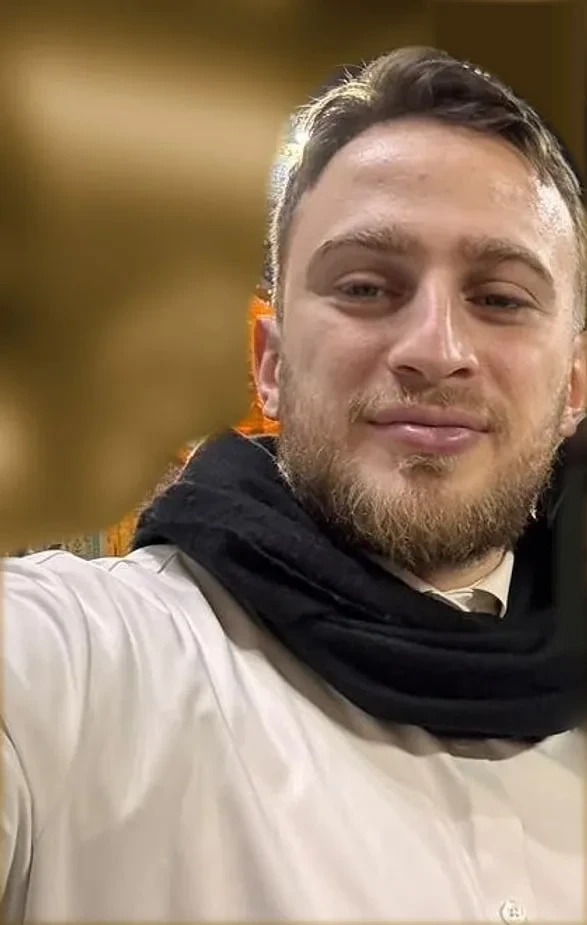
Hadi
A Lebanese linguist and translator with 7+ years of teaching, born into Arabic and fluent in English. Hadi teaches spoken dialect, classical Fusha and religious texts to students around the world, always one-to-one and always built around your goal.
His lessons combine a linguist's precision with a teacher's patience. You'll understand why Arabic works the way it does, not just memorise it.
Before you message
Which dialect exactly will I learn?
Levantine Arabic, the dialect of Lebanon, Syria, Jordan and Palestine. Hadi is Lebanese, so Lebanese pronunciation and expressions come naturally, and he points out the small differences between the countries as they come up. Egyptian and Gulf expressions can be added if you need them.
Do I need to read Arabic script first?
No. Levantine lessons start with speaking and listening. Reading is added whenever you are ready, and Hadi also teaches you to read Arabizi (Arabic written with Latin letters and numbers), which is how people actually text.
How long is a lesson, and where?
60 minutes, one-to-one, live by video call from anywhere in the world. Hadi sends you the link before each lesson.
Can I talk to Hadi before I commit?
Yes. Everyone starts with a free consultation call on WhatsApp: you meet Hadi, talk about your goal and your level, and leave with a plan. No payment, no commitment.
How do I pay, and what if I need to reschedule?
Message Hadi on WhatsApp. He sends you the payment options and confirms your lesson time. If you need to reschedule, message him as early as you can.
Yalla, let's begin.
Your first message is your first step. Tell Hadi what you want to learn, and he'll reply personally with a plan.
Looking for a different path? Classical Arabic · Religious Studies · See everything on the main site